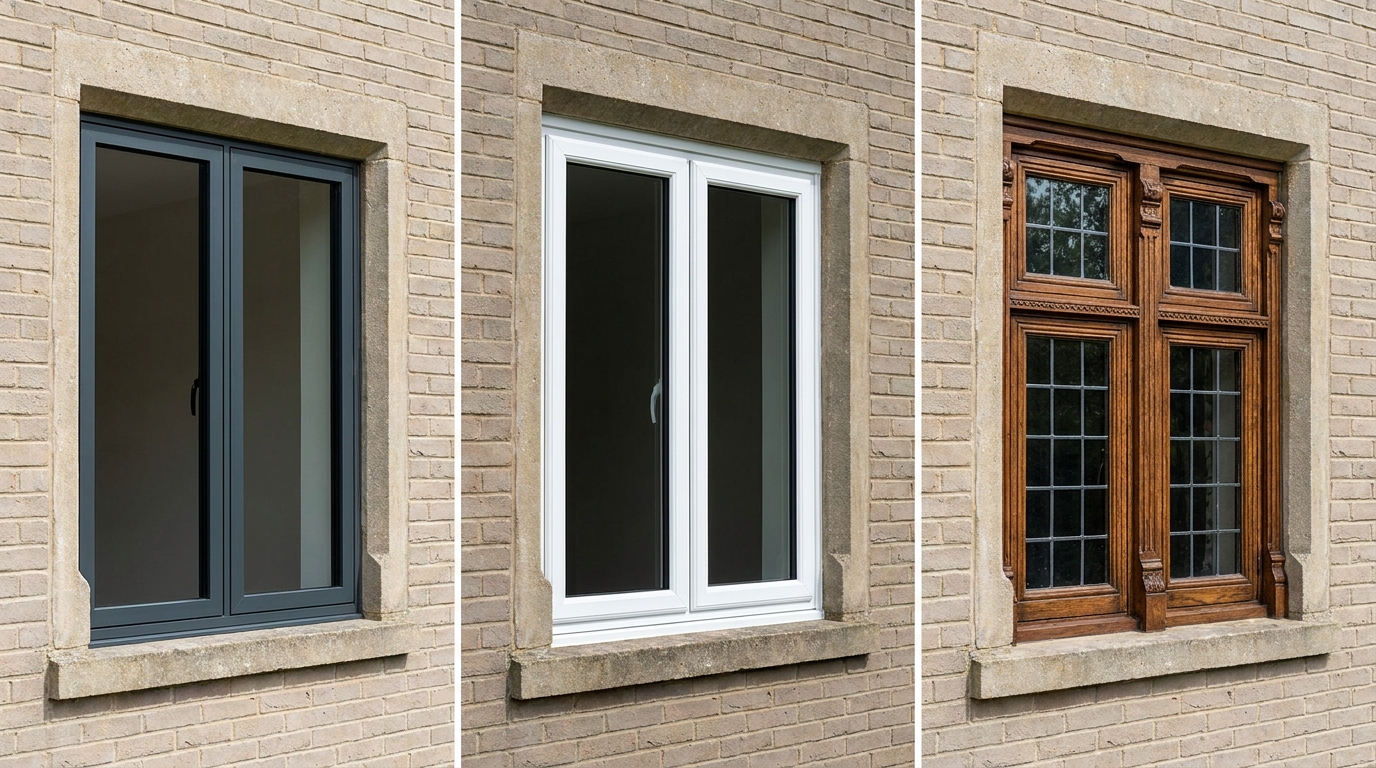
1. Aluminum Windows (The Budget Standard)
Aluminum is the most widely used window material in Nepal due to its affordability and lightweight nature. It is rust-proof and requires practically zero maintenance. However, metal is a highly conductive material. This means aluminum frames easily transfer outside cold into your room during winter and heat during summer.
- Pros: Very cost-effective, sleek profile (allows more glass area), completely water and rust-resistant.
- Cons: Poor thermal insulation, prone to condensation (sweating) in winter, and standard tracks can easily derail or accumulate dust.
2. UPVC Windows (The Modern Insulator)
UPVC (Unplasticized Polyvinyl Chloride) is rapidly taking over urban construction in places like Kathmandu and Pokhara. UPVC is a plastic polymer reinforced with galvanized steel inside. It is a fantastic insulator, keeping your room significantly warmer in winter. It also features multi-point locking systems and rubber gaskets that provide superior soundproofing against street noise.
- Pros: Excellent thermal & sound insulation, zero termite issues, no painting required, highly durable against monsoon rains.
- Cons: Thicker frames reduce slightly glass area, costs about 20-30% more than standard aluminum, and cheap unbranded UPVC can turn yellowish under harsh sun.
3. Traditional Wood / Kaath (The Aesthetic Classic)
Hardwoods like Sal (Chaukhat) or Teak have been used in Nepali homes for centuries. Wood provides unparalleled aesthetic beauty, warmth, and excellent natural insulation. However, real hardwood has become a luxury item. It requires highly skilled carpenters, proper seasoning (drying), and strict maintenance to protect against moisture and termites.
- Pros: Beautiful traditional look, excellent natural insulation, can be carved, lasts generations if maintained.
- Cons: Very expensive, requires continuous maintenance (polishing/painting), vulnerable to termites and warping (bending) during monsoons if not properly seasoned.
🔍 Pro Tip: The Frame is Only Half the Battle (Glass Selection)
Even the best UPVC frame won't keep you warm if you use cheap 4mm single glass. To truly insulate your home, invest in Double Glazing (DGU - Double Glazed Unit). This consists of two panes of glass separated by an air or argon gas gap. This gap acts as a powerful barrier against both outside noise and freezing temperatures.
Extensive Comparison Summary
| Feature | Aluminum | UPVC | Wood (Sal) |
|---|---|---|---|
| Cost / Budget | Low / Budget-Friendly | Medium | High / Premium |
| Thermal Insulation | Poor (Gets cold/hot quickly) | Excellent | Excellent |
| Soundproofing | Fair (Gaps allow noise) | Very High (With rubber seals) | Good |
| Maintenance Required | Almost Zero | Almost Zero (Just wiping) | High (Needs polish/paint) |
| Termite / Water Damage | 100% Safe | 100% Safe | Vulnerable if untreated |
⚠️Installation Site Warning (Seepage):Whether you install Aluminum or UPVC, the joint between the window frame and the masonry brick wall is highly vulnerable to monsoon rainwater seepage. Ensure your Mistri completely fills the gaps with expanding PU Foam and seals the outer edges with high-quality weather-resistant Silicon Sealant before painting the exterior.