1. Correct Sand-Cement Ratios (Masala)
The strength and finish of your plaster depend heavily on the mortar mix. According to IS 1661, you should not use a 'one-size-fits-all' ratio. Different surfaces require different mixtures. Always ensure the sand is sieved (chhaneko) properly to remove large pebbles and silt before mixing.
- Ceiling Plaster (Roof): 1:3 or 1:4 (1 part cement to 3 parts sand). Maximum thickness should be 6mm to 10mm to prevent it from falling off due to gravity.
- Internal Walls: 1:4 or 1:5 ratio. Standard thickness is around 12mm.
- External Walls: 1:4 ratio. Needs a richer mix for weather protection. Thickness should be 15mm to 20mm (applied in two coats).
2. The Golden Rule: Chicken Mesh (Jali)
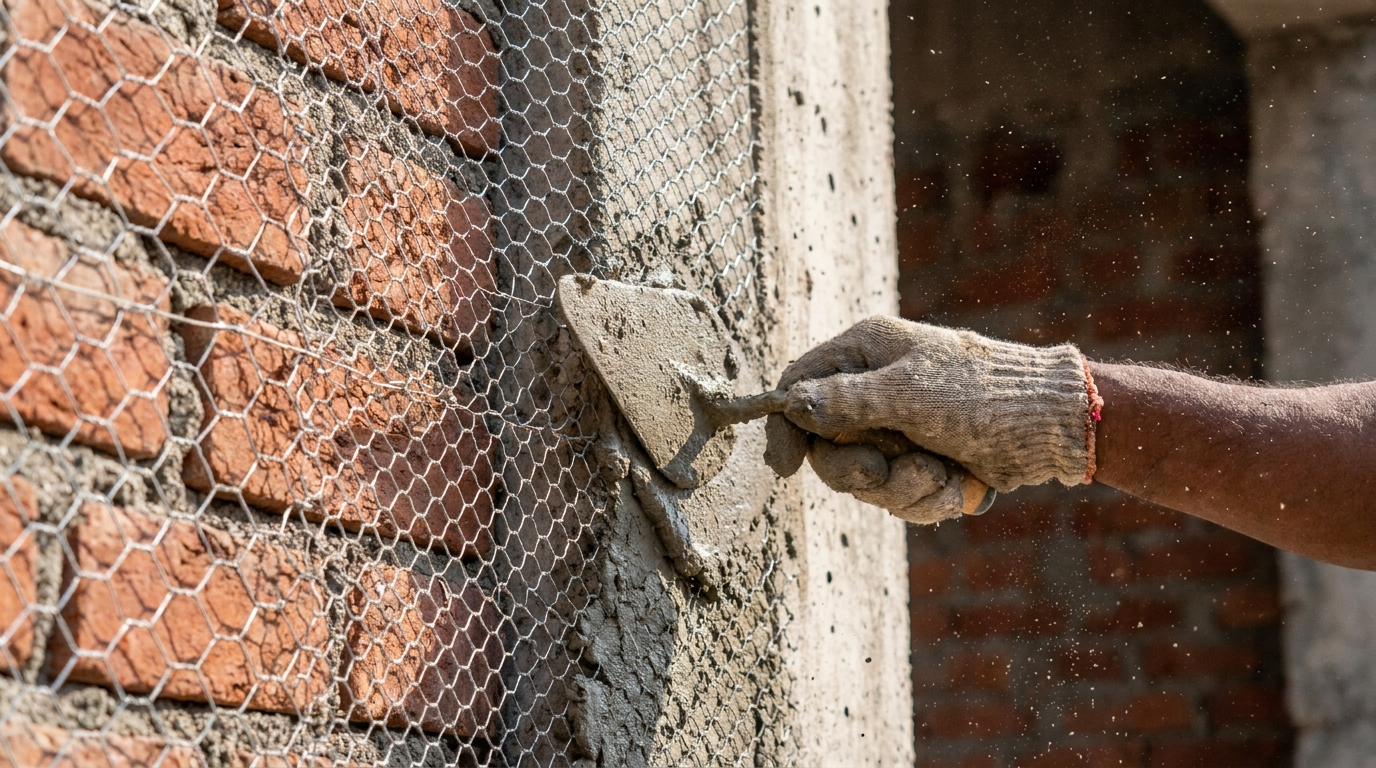
Shrinkage cracks often appear in straight lines on walls. To prevent this, your Mistri MUST nail a strip of wire mesh (Chicken mesh/Jali) or fiber mesh before plastering over specific high-stress areas.
Where to use Chicken Mesh:
- Over all concealed electrical conduits (pipes) chased into the brickwork.
- At the joint between RCC columns/beams and the brick wall (since concrete and bricks expand at different rates).
3. Pre-Wetting and Curing (क्युरिङ)
Plaster needs moisture to gain strength. If dry bricks are plastered, they will instantly suck the water out of the wet cement, causing the plaster to dry too fast, weaken, and crack (plastic shrinkage).
- Before Plastering (Pre-wetting): The Mistri must thoroughly wash and wet the brick wall the evening before or hours prior to plastering.
- After Plastering (Curing): Wait 24 hours for the plaster to set, then spray water on it lightly. Cure the wall continuously for at least 7 to 10 days.
Sponsored
⚠️Crucial Plastering Warning (Thickness):Never allow the Mistri to apply plaster thicker than 15mm in a single coat. Thick plaster is heavy and will sag, detach from the wall, or develop deep structural cracks. If a wall is highly uneven and needs 25mm of plaster, it MUST be applied in two separate coats, waiting a day or two between applications.
Site Supervision Checklist for Homeowners
- Check that the sand being used is properly sieved and clean.
- Ensure the wall is damp (pre-wetted) before the Mistri applies the cement slurry (Ghol).
- Verify that chicken mesh is firmly nailed over all electrical pipes and column joints.
- Assign someone to consistently water (cure) the walls for 7-10 days after completion.