Pillar (Column) Size Rules in Nepal: Use 14x14 Unless Engineered
Why the standard rule of thumb is now strictly 14"x14" (350mm), and why you cannot use smaller pillars without a formal structural computer design.
Quick Rules You Must Know
Mandatory Pillar Size
14" x 14" (350mm)
Explicitly use this size UNLESS an engineer does a structural design for you.
Minimum Main Steel
8 Rods
You must use at least eight steel rods inside the pillar.
Ring Hook Shape
135-Degree Bend
The steel rings (ties) MUST be bent inward, not at a simple 90-degree angle.
1. The New Rule of Thumb: Why 14x14 is Mandatory
After checking many damaged houses from the 2015 earthquake, engineers found that the old 12x12 inch pillars were breaking. To solve this, there is now a strict 'Rule of Thumb' for all homeowners building standard houses.
THE RULE: You MUST explicitly use 14x14 inch (350mm x 350mm) pillars. You cannot use 12x12 or 12.6x12.6 just by guessing. The ONLY way you are allowed to use a smaller pillar is if you hire a licensed structural engineer to do a complex 3D computer design of your exact house, proving it is safe.
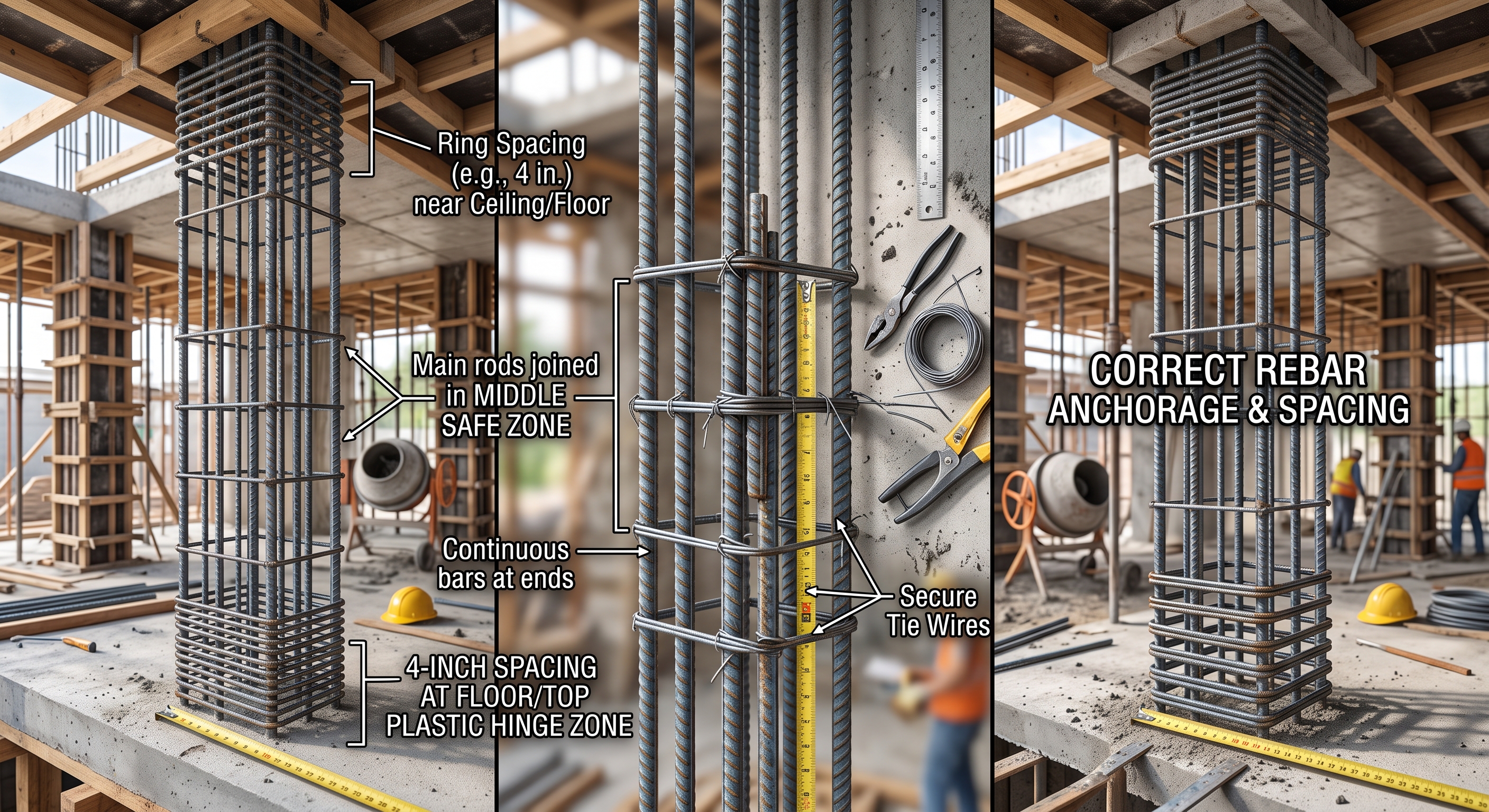
Correct Ring Spacing & Rod Joining Zone
Notice how the rings are tied very close together (4 inches) near the ceiling and floor. The main rods are only joined in the middle safe zone.
2. Rules for Main Steel Rods (Vertical Rebar)
Minimum Thickness: Never use steel rods thinner than 12mm. For the 14x14 thumb rule, using eight 16mm rods is the standard practice.
Where to Join Rods (Lapping): Steel rods are usually 40 feet long and need to be joined. NEVER join rods near the floor or ceiling. Rods must only be joined in the exact middle of the pillar's height.
Overlapping Length: When joining two rods, they must overlap by a specific length (usually 50 to 60 times the thickness of the rod). Tie them tightly with binding wire.
3. Rules for Steel Rings (Ties)
The 135-Degree Hook (Crucial!): Old rings were bent in a square (90 degrees). During an earthquake, 90-degree rings open up, and the pillar bursts. The ends of the ring MUST be bent inward (135 degrees) so they hook into the concrete core.
Ring Spacing Near the Ends: Near the ceiling and the floor (about 1.5 feet from the top and bottom), the rings must be tied very close together—just 4 inches apart. This is where the pillar bends the most.
Ring Spacing in the Middle: In the middle of the pillar, the rings can be spaced slightly further apart, usually 6 inches.
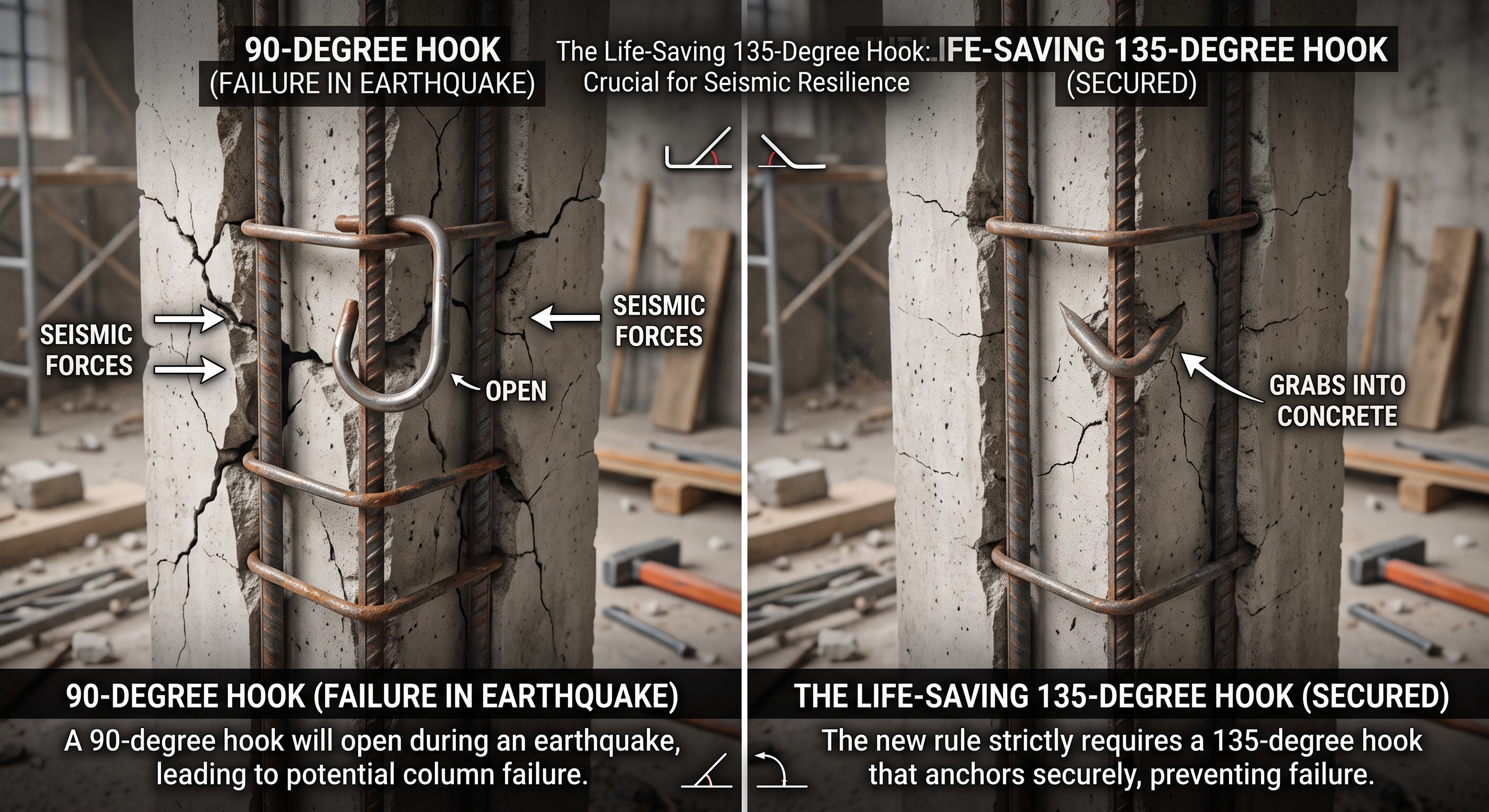
The Life-Saving 135-Degree Hook
A 90-degree hook will open during an earthquake. The new rule strictly requires a 135-degree hook that grabs into the concrete.
4. Homeowner's Site Checklist
Take a measuring tape and check these 5 things before they pour the concrete:
Summary of Old vs New Rules
| Time Period | Allowed Pillar Size | Condition to Use | Is it Legal Today? |
|---|---|---|---|
| Before 2015 | 9"x9" | None | No (Illegal) |
| 2015 to 2023 | 12"x12" | Needs Custom Design | No (Unsafe to guess) |
| 2024 to Present | 14"x14" (350mm) | No Custom Design Needed | Yes (Mandatory Default) |
Pillar Materials & Safety Calculator
Select a pillar size and height to see if it is safe, and find out exactly how many steel rings you need.
MANDATORY THUMB RULE (SAFE): You MUST use this 14"x14" size unless you pay an engineer to do a computer structural design.