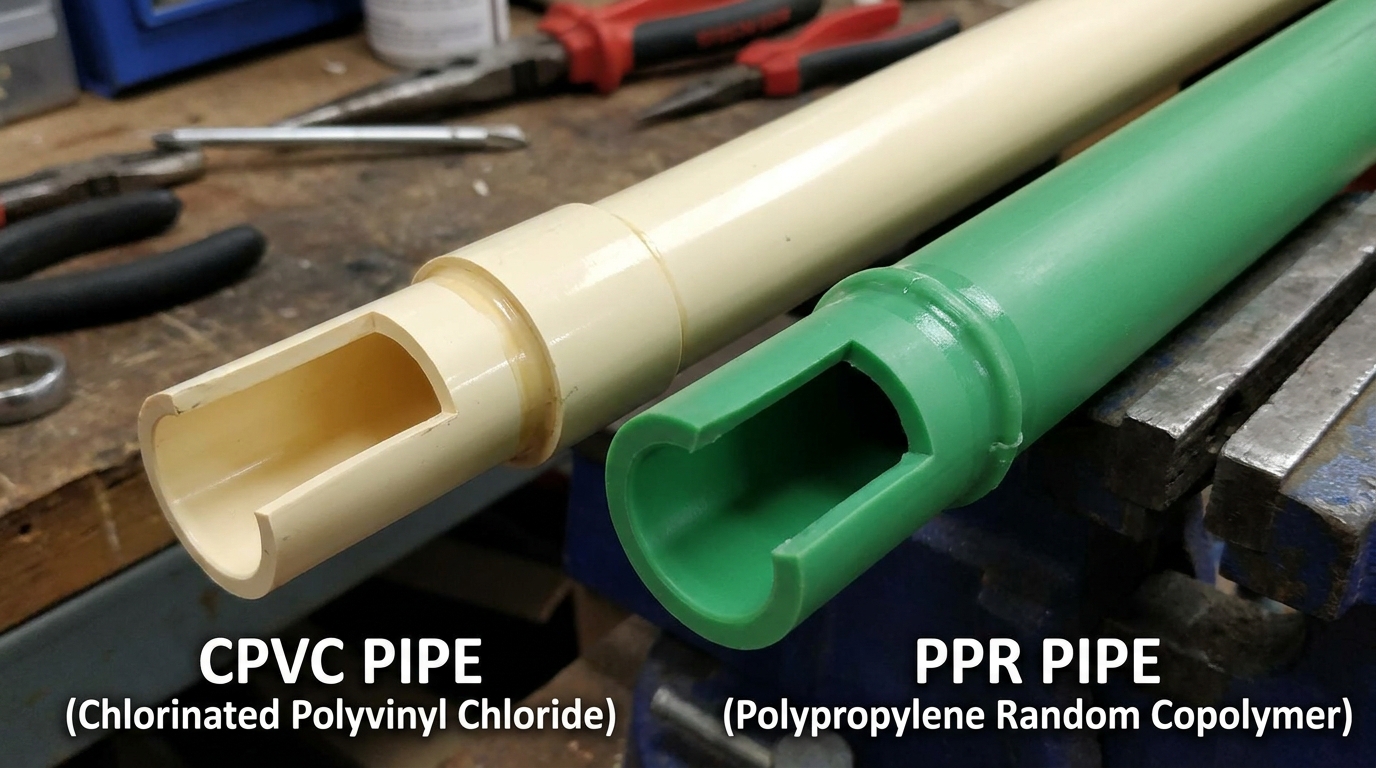
1. CPVC Pipes (Chlorinated PVC)
CPVC pipes (usually yellowish) are the most common residential plumbing pipes in Nepal. According to IS 15778 standards, they safely handle hot water up to 93°C. The biggest advantage of CPVC is its simple installation—a local plumbing Mistri uses chemical solvent cement (special glue) to join the pipes and fittings.
- Pros: Cost-effective, easy to install, easy to repair later, and widely available.
- Cons: Joints rely entirely on glue. If the Mistri is careless with the solvent cement, leaks can occur.
2. PPR Pipes (Polypropylene Random Copolymer)
PPR pipes (usually green or white with colored stripes) are premium, highly durable pipes governed by IS 15801. Instead of glue, they are joined using a thermal fusion heating machine. The pipes melt and fuse together, essentially becoming a single continuous piece. This creates a 100% leak-proof joint.
- Pros: Zero leakage risk at joints, highly durable, and excellent for high-pressure systems.
- Cons: More expensive material, requires a highly skilled plumber with a heating machine, and hard to modify once sealed inside a wall.
Sponsored
Quick Comparison Summary
| Feature | CPVC | PPR |
|---|---|---|
| Jointing Method | Solvent Cement (Chemical Glue) | Thermal Fusion (Heating Machine) |
| Plumber Skill Needed | Standard Skill | Highly Skilled |
| Material Cost | Economical / Budget-Friendly | Premium (More Expensive) |
| Leakage Risk | Low (Depends entirely on Mistri's care) | Zero (Fusion creates a single joint) |
⚠️Crucial Plumbing Warning (Pressure Test):Whether you choose CPVC or PPR, NEVER let your Mistri plaster over concealed pipes without performing a Hydro-Test first! A pressure pump must be attached to the pipes and held at high pressure for several hours to check for microscopic joint leaks.
Final Recommendation for Homeowners
If you have a standard construction budget and want a system that is easy to install and simple to repair in the future, CPVC is an excellent and safe choice. However, if you are building a premium home, plan to use high-pressure pumps, or simply want total peace of mind against joint leaks hiding inside your walls, upgrading to PPR is a smart, lifetime investment.