1. Why is Curing Critical? (Hydration Process)
Concrete does not harden by drying out—it hardens through a chemical reaction between cement and water called Hydration. If water evaporates too quickly from freshly poured concrete due to heat or wind, the hydration reaction stops prematurely. This results in weak, porous concrete that cracks easily and fails to reach its intended compressive strength.
- Strength Gain: Concrete reaches about 65% of its strength in 7 days and 99% in 28 days only if adequate moisture is retained.
- Prevents Shrinkage Cracks: Stops plastic shrinkage cracks from forming on top of roof slabs (Dhalai) during early stages.
2. How Long Should You Cure Concrete? (IS 456 Standards)
According to IS 456:2000 and NBC structural guidelines, the minimum curing duration depends on the cement type and weather conditions at your construction site:
- ✓OPC Cement (Normal Weather): Minimum 7 days continuous wet curing.
- ✓PPC Cement or Hot/Dry Weather (e.g., Terai Summer): Minimum 10 to 14 days continuous curing.
3. Curing Methods: Slabs vs. Columns
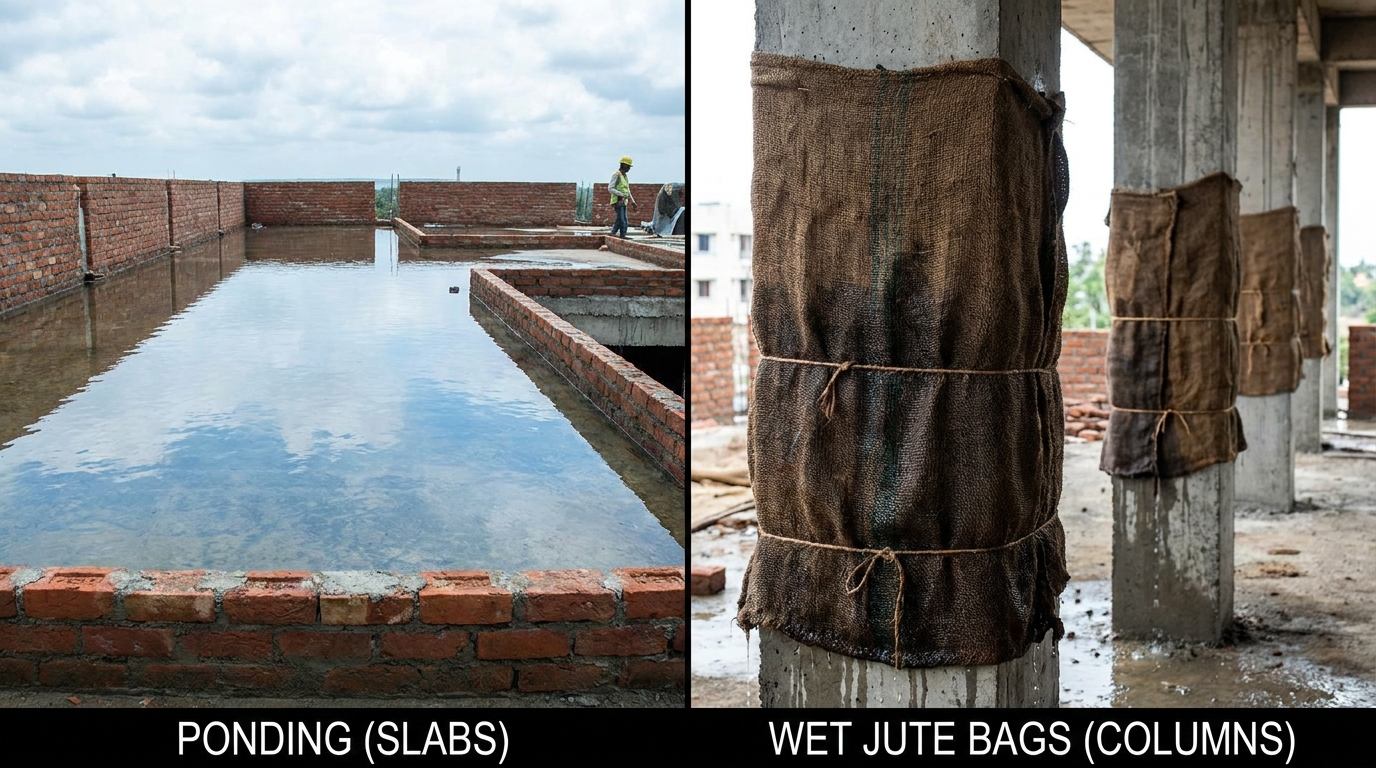
A. Roof Slabs (Dhalai) - Ponding Method
Ponding is the most effective method for horizontal surfaces like slabs. Small bunds or square ponds made of lean cement-sand mortar or clay (50mm height) are constructed across the slab surface. Water is filled into these ponds and replenished daily.
B. Vertical Columns & Beams - Wet Jute/Gunny Bags
You cannot pond water on vertical surfaces like pillars and beams. After removing the shuttering (Farma), wrap the columns tightly with thick jute/gunny bags (Bora). Spray water on these bags at least 3 to 4 times a day so they remain continuously damp.

Method Comparison: Ponding vs. Wet Jute Bags
| Parameter | Ponding Method | Wet Jute/Gunny Bags |
|---|---|---|
| Best Application | Horizontal Roof Slabs (Dhalai) | Vertical Columns (Pillar) & Beams |
| Water Consumption | Moderate to High | Low to Moderate |
| Labor Effort | Low (Refill once daily) | High (Requires spraying 3-4x/day) |
| Moisture Retention | Excellent (Continuous submergence) | Good (If kept wet consistently) |
⚠️Crucial Construction Site Warning:Never let freshly un-shuttered columns dry out in the sun! Curing MUST begin within 24 hours after removing the formwork (Farma). If your Mistri simply sprays water on an bare vertical column twice a day without wrapping it in jute bags, 90% of the water runs off immediately, leaving the concrete dry and weak.
Best Practices for Homeowners in Nepal
1. Start ponding on the roof slab within 24 to 48 hours after casting (Dhalai) as soon as the concrete has set sufficiently to walk on.
2. Always buy enough jute gunny bags (Bora) before pouring columns (Pillar). Ensure the Mistri wets them continuously for at least 10 to 14 days.
3. In dry or hot weather (like Terai summers), cover ponds with polythene sheets or moist gunny bags to reduce evaporation.